
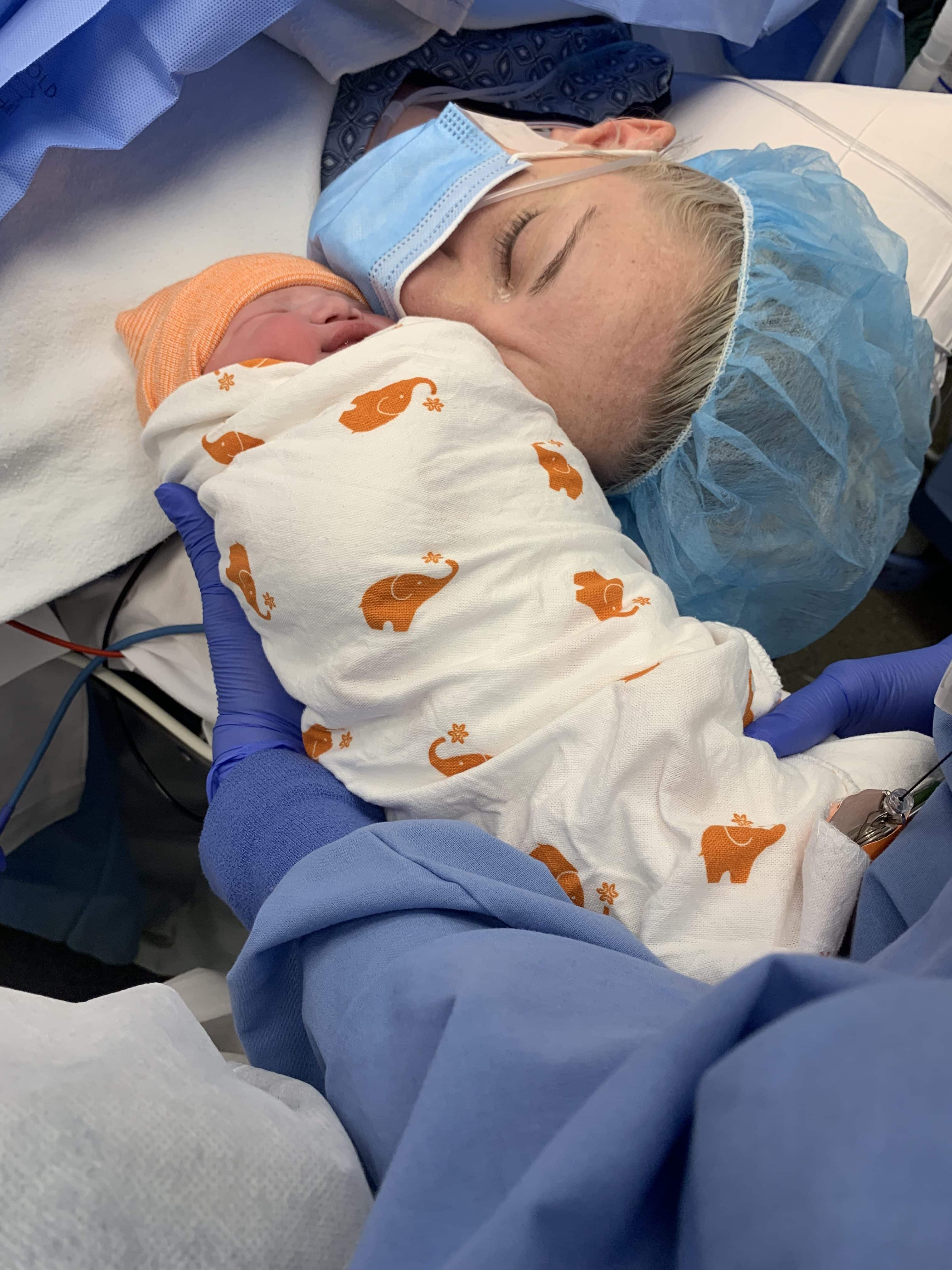
“She’s here! She’s so beautiful!”
My husband’s voice sounded so far away, even though I knew he was standing right next to me. I couldn’t believe this was how the birth of my first child was unfolding. My arms were outstretched, heavy blankets pressing down on them, as I lay on the operating table unable to even open my eyes. The anesthesiologist had given me medication that made it nearly impossible to stay awake. When I did manage to drift back toward consciousness, I couldn’t open my eyes and could barely make out what anyone was saying, let alone hear my daughter’s first cries.
After my daughter was born, my husband was instructed to take her to the recovery room while the surgical team finished closing me up. I remember him sobbing and saying he didn’t want to leave me. Somehow, I was able to push out a few words, asking him to go with her, because I didn’t want her to be alone. After that, everything is hazy. I only recall briefly waking in the recovery room as a nurse pressed painfully hard on my stomach. The pain was so sharp that I instinctively grabbed her arm to stop her, then slipped back into unconsciousness.
I didn’t fully come to until about three hours after my daughter’s birth. That was the first time I was able to hold her. In the days that followed, as I lay in my hospital bed, I replayed every detail I could remember from my 36-hour labor and the cesarean. I desperately tried to piece together what had gone wrong, and how I had ended up in that place.
It took at least 6 months for me to be able to put language to what had happened: the birth of my daughter had been traumatic.
Finding Healing After a Traumatic Birth
If you’ve ever felt like your birth was taken out of your hands, or like the experience left scars you weren’t expecting, I want you to know you’re not alone. Healing from a traumatic birth is a process, and it looks different for every parent. Here are a few things that helped me begin to recover:
- Talk about your experience. Share your story with someone you trust, a partner, a close friend, or a professional who will really listen. Putting words to the experience can be incredibly powerful.
- Seek clarity if you need it. Sometimes asking your provider to walk you through what happened during your labor and birth can help fill in the gaps and give you peace of mind.
- Allow yourself to grieve. Even if your baby is healthy, it’s okay to feel sadness or anger about how your birth unfolded. Both gratitude and grief can exist together.
- Prioritize your recovery. Sleep when you can, eat nourishing meals, and give yourself permission to rest. Your healing matters just as much as your baby’s care.
- Connect with others who understand. Whether through support groups, a postpartum doula, or online spaces, hearing from others who have lived through birth trauma can remind you that you’re not alone.
Trauma doesn’t erase the love you have for your baby or the strength you showed in bringing them into the world. Over time, with support and care, it’s possible to reclaim your story and carry it with gentleness instead of pain.
A Gentle Reminder
If you’re walking through this right now, please know that your feelings are valid and your healing matters. You don’t have to go through this alone. At Doulas of Utah, we offer postpartum support to help you process and recover after a difficult birth, as well as birth doula support if you’re preparing for another baby and want a different experience next time.
💛 Contact us to learn more about how we can walk alongside you, whether it’s today, tomorrow, or for a future birth.
