
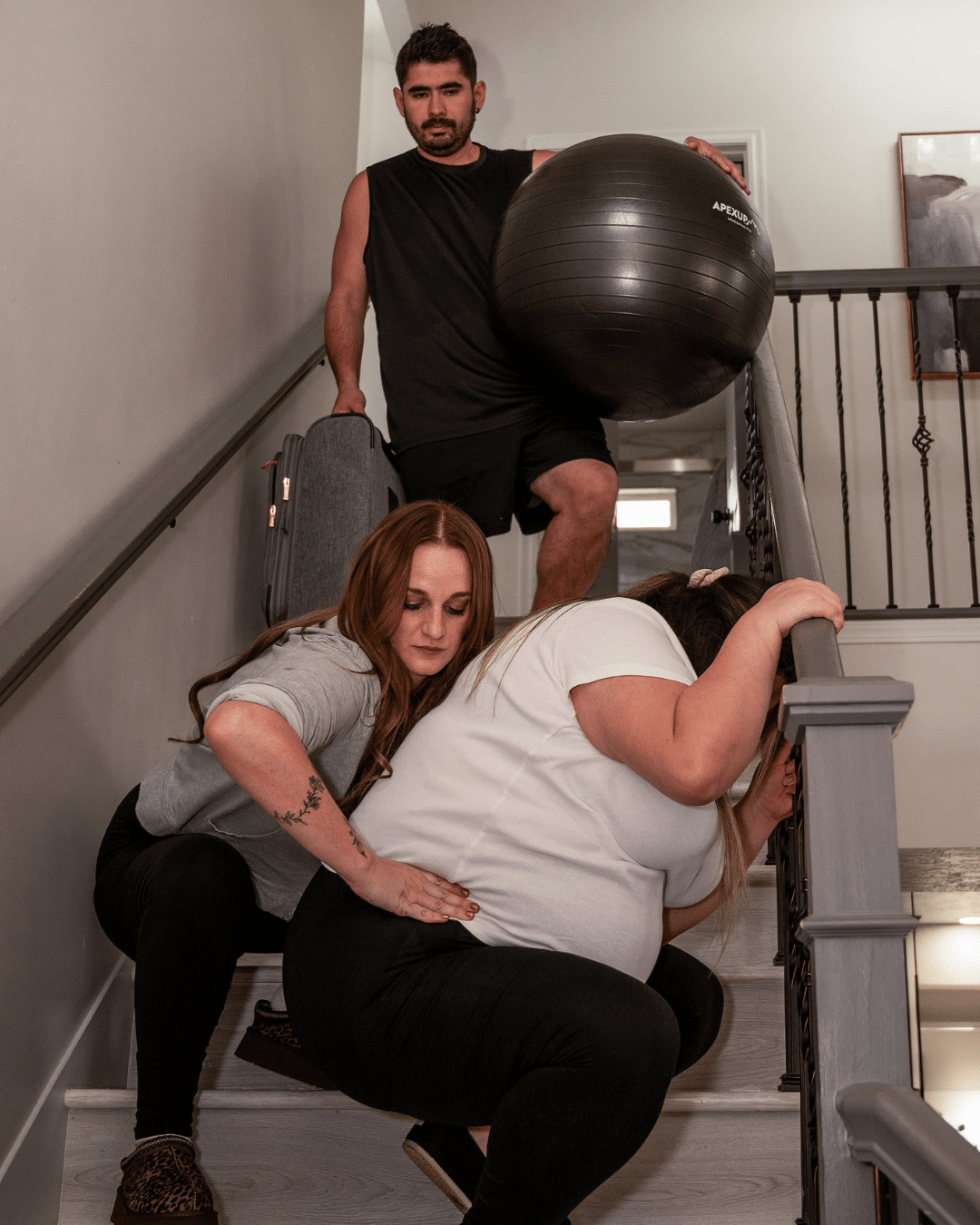
Pain management in labor looks different for every birthing person. Some people plan to use only non-medical comfort measures, others choose medical pain relief, and many find that a combination of both works best. There is no single “right” approach, only what feels supportive, safe, and empowering for you.
Understanding your options ahead of time allows you to make informed decisions and stay flexible as labor unfolds.
Non-Medical Pain Management in Labor
Non-medical pain management tools focus on working with the body during labor. These options can be used on their own or alongside medical interventions and often form the foundation of comfort support.
Common non-medical pain management techniques include:
- Movement and position changes
- Breathing and relaxation techniques
- Hydrotherapy, such as laboring in a shower or tub
- Massage, counter-pressure, and hip squeezes
- Heat or cold therapy
- TENS units
- Continuous emotional support and reassurance
Many birthing people find that having consistent, hands-on support helps them feel more grounded and better able to cope with labor sensations.
Medical Pain Management in Labor
Medical pain management tools are a valid and helpful option for many families, particularly in hospital settings. These may be planned in advance or chosen as labor progresses.
Medical pain management options may include:
- Nitrous oxide
- IV pain medications
- Epidural anesthesia
- Spinal anesthesia, often used during cesarean births
Each option has its own benefits and considerations, and your care provider can help you understand how these tools may affect movement, sensation, and labor progression.
Finding What Works for You
Pain management in labor isn’t about avoiding discomfort at all costs, it’s about having the right tools, information, and support to navigate an intense and transformative experience.
Birth doulas play a key role in pain management in labor, offering continuous physical, emotional, and informational support. A doula can help you explore comfort measures, advocate for your preferences, and adapt your plan as labor unfolds. Whether you’re hoping for an unmedicated or low-intervention birth, planning to use medical pain relief, or somewhere in between, having a doula by your side can help you feel more confident, supported, and prepared every step of the way. Contact us today to speak with a birth doula!
